
Bachelier's Revenge: How a Forgotten Thesis Shaped Modern Finance
Paris. March 29, 1900.
A young French mathematician stands before a jury at the Sorbonne, defending a doctoral thesis unlike anything the room has ever seen. He is not talking about atoms, or celestial mechanics, or any of the grand problems that occupy the great minds of his era. He is talking about the Paris stock market.
His name is Louis Bachelier. He is 29 years old, already behind in life, already fighting against a world that has given him very little. And he is about to write the most important equation in the history of finance — one that will sit, unread, in the dusty back shelves of French academic libraries for over half a century, while the world invents the same ideas from scratch, wins Nobel Prizes for them, and makes fortunes with them.
Bachelier will die in 1946 without knowing any of this.
This is the story of the man who set expectation to zero — and in doing so, planted the seed of a trillion-dollar industry.
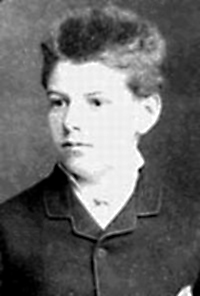
Unknown author, Public domain, via Wikimedia Commons
Contents
The Orphan Who Learned Finance the Hard Way
Louis Bachelier was born on March 11, 1870, in Le Havre, a busy French port city on the Normandy coast. His father, Jules Bachelier, was a wine merchant. His mother was the daughter of a banker. By the standards of provincial France, the family was comfortable.
Then the deaths began.
His mother died in 1881. Louis was eleven. His father died five years later, in 1886. Louis was sixteen.
In one stroke, he was an orphan, the head of a household, responsible for his younger siblings and his father's business. There was no room for grief, and no room for the education he had been promised. He left school to manage the family wine business and work on the floor of the Paris stock exchange — not as a trader, but as a rentes clerk, processing government bond transactions.
It was unglamorous work. But it put him at the heart of something remarkable: the chaotic, unpredictable daily drama of financial markets. He watched prices rise and fall for no apparent reason. He watched traders make and lose fortunes. He saw, with unusual clarity, that the market was not rational in the way most people imagined — it was random.
Most people who worked on that trading floor saw randomness as the enemy, the noise to be predicted and overcome. Bachelier saw it as the subject itself.
Most people saw randomness as the enemy, the noise to be predicted and overcome. Bachelier saw it as the subject itself.
By the early 1890s, somehow, on his own terms and his own timeline, he made it to Paris. He enrolled at the Sorbonne, working toward a mathematics degree. He was older than his classmates. He had no patron, no connections, no family money. He was, in every sense, fighting uphill.
But he had an idea that nobody else had.
The Thesis That Should Have Changed Everything
On March 29, 1900, Bachelier stood before his doctoral jury and presented Théorie de la Spéculation — "Theory of Speculation."
The thesis was 86 pages long. It opened with what seemed like a simple observation about financial markets:
"The mathematical expectation of the speculator is zero."
This single sentence, buried in the preamble of an unassuming French thesis, is the key that unlocks one of the most powerful ideas in modern finance. We'll come back to exactly what it means and why it's worth billions. First, let's understand what Bachelier built on top of it.
His core insight was this: stock price changes are random, and they follow the same mathematical pattern as the diffusion of heat through a material.
Think about a drop of ink falling into still water. It doesn't move in a straight line. It spreads out in all directions, randomly, each molecule bumping into others, the cloud growing wider over time. The shape of that spreading cloud — the probability distribution of where any given ink molecule might end up — follows a precise mathematical curve: the bell curve, or Gaussian distribution.
Bachelier showed that stock prices behave the same way.
If today's price is 100, then tomorrow's price might be 98, or 103, or 99 — but the distribution of where it lands follows a bell curve centered on today's price. And crucially: the spread of that bell curve grows proportionally to the square root of time. Double the time horizon, and the uncertainty doesn't double — it grows by a factor of .
This was extraordinary. Nobody had ever written this down for financial markets. Nobody had ever proved it mathematically. Nobody had even thought to connect heat diffusion to stock prices.
But here's the part that would have really stunned the room, if anyone had fully grasped it: Bachelier had just described Brownian motion — the random, jittering path of microscopic particles first observed by Scottish botanist Robert Brown in 1827 — five years before Einstein.
In 1905, Albert Einstein would publish his famous paper explaining Brownian motion in terms of molecular collisions, proving the existence of atoms. Einstein would get all the credit. He deserved it — his derivation was rigorous, complete, physically grounded. But Bachelier had the mathematics first, for a different problem, from a different direction.
Two thinkers, on opposite sides of a wall between physics and finance, groping toward the same mathematical truth. Neither knew the other existed.
Two thinkers, on opposite sides of a wall between physics and finance, groping toward the same mathematical truth. Neither knew the other existed.
Poincaré's Faint Praise — and Its Consequences
Bachelier's thesis committee was chaired by Henri Poincaré — perhaps the greatest living mathematician in France at the time. If anyone could recognize the magnitude of what Bachelier had done, it was Poincaré.
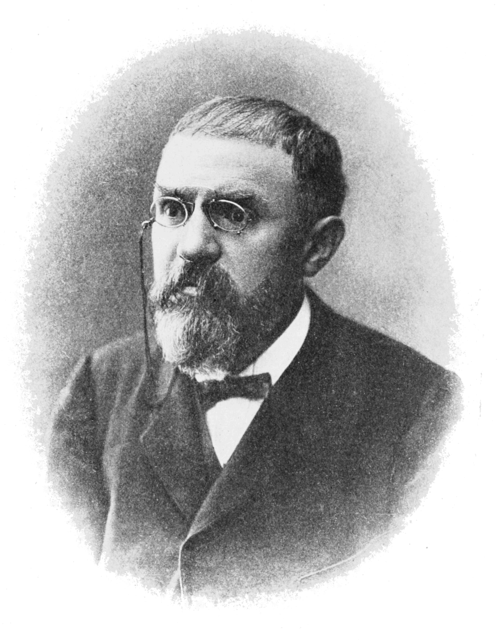
Unknown author, Public domain, via Wikimedia Commons
Poincaré's written report on the thesis is a masterpiece of academic hedging.
He acknowledged the work was original. He said the ideas were "novel." He admitted that the methods were correct. He noted that Bachelier had introduced mathematics to a domain — financial speculation — where it had never previously ventured.
And then he gave Bachelier a grade of "mention honorable" — the lowest passing grade in the French doctoral system.
Not "très honorable", the top mark that opened doors to academic positions. Not even the middle grade. The bottom.
Poincaré wrote that the subject was "far removed from those usually considered by mathematicians" — which was true, but not, in itself, a criticism. He wrote that it was "somewhat daring" — again, accurate, but ambiguous enough to suggest recklessness rather than boldness. He offered no strong endorsement, no enthusiasm, no sense that this was work the scientific community should take notice of.
Why? Scholars still debate this. The most common explanation is simple: the Paris stock market was not a topic that respectable mathematicians worked on. Physics? Yes. Celestial mechanics? Absolutely. The price of French government bonds? That was commerce, not science. Poincaré was genuinely uncertain whether financial markets were appropriate subject matter for rigorous mathematics.
The second possibility is more uncomfortable: Poincaré didn't fully understand what Bachelier had done. The connection to diffusion equations, to probability theory, to Brownian motion — these were not obvious in 1900. The framework for understanding them hadn't fully been built yet. Poincaré may have seen a clever but quirky piece of applied mathematics, not a foundational contribution to probability theory.
Whatever the reason, the result was the same. The grade of "mention honorable" meant that Bachelier could not compete for the most prestigious academic positions. Without a top grade, without a patron, without connections, he was stuck — a brilliant mathematician perpetually applying for positions one rank below where his work deserved to place him.
Without a top grade, without a patron, without connections — a brilliant mathematician perpetually applying for positions one rank below where his work deserved to place him.
The Zero That Became a Trillion Dollars
Let's stop the tragedy for a moment and look at the equation itself — because this is the part that matters for everything that follows.
"The mathematical expectation of the speculator is zero."
What does this mean, exactly?
Bachelier was saying that in a fair, competitive market, the expected value of speculating on price movements is zero. Not negative (it's not a rigged game). Not positive (there's no free money lying around). Exactly zero.
More precisely: if you know today's stock price, your best prediction for tomorrow's price is today's price. The market has no memory. The coin has no bias. The best forecast is the status quo.
In mathematical notation:
The expected future price, given everything you know today, equals today's price. This is not a philosophical statement. It's a mathematical constraint — a statement about the structure of price movements.
And this constraint has a name. It's called the martingale property.
A martingale is any process where the expected future value equals the current value — no trend, no drift, just pure randomness around today's level. Bachelier didn't use this word (it wouldn't be formalized until decades later), but he described the concept completely.
Now watch what happens when you build on this foundation.
Step 1: Zero expectation → No free money.
If prices are a martingale, you cannot build a trading strategy that consistently makes money above the risk-free rate. Any strategy that looks profitable must be carrying hidden risk. The market prices that risk away automatically.
Step 2: No free money → Risk-neutral pricing.
Here is the leap that would take 70 years for the financial world to fully appreciate. If there's no free money, you can price any financial contract — any option, any derivative, any bet on future prices — by asking: "What would this be worth in a world where all assets earn the risk-free rate?"
In this risk-neutral world, you set the expected return of every asset equal to the risk-free rate. You eliminate all excess return. You set the drift of price movements to a fixed, known value.
In other words: you set the expectation to the risk-free rate (which, in Bachelier's original formulation, he simplified to zero).
Step 3: Risk-neutral pricing → The Black-Scholes formula.
Fischer Black, Myron Scholes, and Robert Merton, working in the early 1970s, asked a specific question: what is the fair price of a European call option — the right to buy a stock at a fixed price on a fixed future date?
They modeled stock prices as geometric Brownian motion (a small upgrade from Bachelier's arithmetic Brownian motion — the geometric version ensures prices can't go negative). Then they constructed a portfolio that perfectly hedged the option against small price movements — a portfolio with zero risk.
A portfolio with zero risk must, in the absence of arbitrage, earn exactly the risk-free rate.
Setting that return equal to the risk-free rate — enforcing Bachelier's zero-expectation principle — they derived a partial differential equation:
This is the Black-Scholes PDE. Solve it with the boundary condition that the option pays at expiry, and you get the famous formula:
The here — that bell curve probability — is Bachelier's Gaussian. The random walk is Bachelier's random walk. The zero-expectation principle that makes the whole thing work is Bachelier's zero expectation.
Black, Scholes, and Merton built a magnificent engine. But Bachelier forged the crankshaft in 1900, in a Sorbonne basement, while the rest of the academic world was thinking about atoms.
Black, Scholes, and Merton built a magnificent engine. But Bachelier forged the crankshaft in 1900, while the rest of the academic world was thinking about atoms.
When Robert Merton and Myron Scholes accepted the Nobel Prize in Economics in 1997, they explicitly acknowledged Bachelier as the intellectual foundation of their work. Fischer Black had died in 1995 — two years too early to receive it. Bachelier, of course, had died in 1946 — 51 years before the world officially recognized what he had started.
The Long Purgatory
For the thirty years after his thesis, Bachelier lived the academic equivalent of limbo.
He published papers on probability theory — serious, substantial work. He wrote a comprehensive textbook on the theory of probability in 1912. He expanded his financial models. He tried, repeatedly, to secure a permanent university position.
He was denied. Every time.
The reasons shifted. Sometimes he was the wrong age. Sometimes the position went to someone with better connections. Most painfully, he fell into a bureaucratic trap that shows exactly how cruel academic systems can be to original thinkers.
In the 1920s, Bachelier applied for a position at the University of Dijon. His application was reviewed by Paul Lévy — by then one of France's leading probabilists, and himself a towering figure in stochastic processes. Lévy read one of Bachelier's papers and found what he believed was an error: a formula that appeared to violate the properties of Brownian motion.
Lévy wrote a critical letter. He recommended against Bachelier's appointment.
The problem? The "error" was not an error. Lévy had misread the paper. Bachelier was describing a reflected Brownian motion — a particle that bounces off a wall — not the standard case. The formula was correct. But the damage was done. The position went to someone else.
Years later, Lévy acknowledged his mistake. He wrote to Bachelier to apologize, calling the work "ingenious." By then, Bachelier was in his fifties.
In 1927, at the age of 57 — after a career that had consisted largely of temporary lectureships and adjunct positions scattered across provincial French universities — Bachelier finally received a permanent appointment, as a professor at the University of Besançon.
He had waited 27 years from his thesis to this moment.
He worked there until his retirement. He died in 1946 at the age of 75, in Saint-Servan-sur-Mer, a coastal town in Brittany. There is no evidence that he knew, in his final years, that his work was about to be rediscovered. There is no evidence that he received any significant international recognition during his lifetime.
The world had moved on. The man who gave it the mathematics of randomness had been left behind.
The world had moved on. The man who gave it the mathematics of randomness had been left behind.
The Detective Story: A Postcard That Changed Finance
The rediscovery of Bachelier begins, like many great intellectual reversals, with someone stumbling onto something in a library.
It is the mid-1950s. The American mathematical community is buzzing with new ideas about probability and statistics. A statistician at the University of Chicago named L.J. Savage (Leonard Jimmie Savage — himself a pioneer of Bayesian statistics and subjective probability) is browsing through French mathematical literature of the early 20th century.
He finds Bachelier's 1914 book, Le Jeu, la Chance et le Hasard (Game, Chance and Randomness), and is startled. This is interesting. More than interesting. He fires off postcards to a list of economists and mathematicians he respects, asking in effect: Have you seen this? Did you know a Frenchman was doing this in 1900?
One of those postcards lands on the desk of Paul Samuelson at MIT.

Bernard Gotfryd, Public domain, via Wikimedia Commons
Samuelson is, at this point, the most influential economist in America — the man who will eventually win the Nobel Prize in 1970, the author of the textbook that defined economics education for a generation. And he is also, quietly, one of the people working on the mathematical foundations of stock price behavior.
He thinks he is doing original work. Then he reads the postcard from Savage. Then he tracks down a copy of Bachelier's 1900 thesis.
He is, by his own later account, stunned.
Samuelson later recalled that reading Bachelier was like discovering that someone had already climbed your mountain. The random walk, the Gaussian distribution of price changes, the diffusion equation, the zero-expectation principle — all there, in 1900, in a thesis that had been mouldering in French academic obscurity for half a century.
Reading Bachelier was like discovering that someone had already climbed your mountain. All there, in 1900, mouldering in French academic obscurity for half a century.
Samuelson did the right thing: he cited Bachelier extensively, championed his priority, and made sure the rediscovery was permanent. In his 1965 paper "Proof That Properly Anticipated Prices Fluctuate Randomly" — one of the most important papers in financial economics — Samuelson explicitly built on Bachelier's foundations and gave him full credit.
The chain of influence now ran clearly: Bachelier → Samuelson → a young finance professor named Eugene Fama, who would codify the ideas into the Efficient Market Hypothesis in 1970 → Fischer Black and Myron Scholes, who read all of this, understood it deeply, and in 1973 published the formula.
Every link in that chain traces back to a French orphan who worked on a trading floor in the 1880s and defended a thesis that received a "mention honorable" grade.
From Zero to Nobel: The Black-Scholes Revolution
When Black and Scholes published "The Pricing of Options and Corporate Liabilities" in the Journal of Political Economy in 1973, it didn't arrive quietly. Options markets had just been formalized with the opening of the Chicago Board Options Exchange that same year. The timing was almost uncanny.
Within months, options traders on the floor of the CBOE had programmed the formula into handheld calculators. They called them "Black-Scholes machines." If your intuition about a price diverged from what the formula said, the smart money was usually with the formula.
The financial industry that grew up around the Black-Scholes model is difficult to overstate. By the 1990s, the global derivatives market was measured in trillions of dollars in notional value. The formula was embedded in every major financial institution on Earth. Quantitative analysts — "quants" — built entire careers on the mathematics that Black, Scholes, and Merton had formalized.
When the Nobel committee gave the 1997 prize to Merton and Scholes, the citation read: "for a new method to determine the value of derivatives." Fischer Black, who had died of cancer in 1995, was mentioned in the committee's announcement as equally deserving. He never received the prize.

Public domain, via Wikimedia Commons

CC BY-SA 3.0, via Wikimedia Commons

MIT, CC BY-SA 4.0, via Wikimedia Commons
Both Black and Bachelier shared this particular irony: the work that will outlive them both, the mathematics that would move trillions of dollars, arrived too late or too early for the world to properly thank either man.
Vindication, Incomplete and Overdue
In 2000, on the centenary of his thesis, the mathematical finance community organized a conference in Paris in Bachelier's honor. The Louis Bachelier Finance Society was founded. His 1900 thesis was translated into English by Mark Davis and Alison Etheridge and published by Princeton University Press under the title Louis Bachelier's Theory of Speculation: The Origins of Modern Finance.
Scholars who read it closely are usually surprised. Not by its quaintness — but by how much it gets right. Bachelier's Gaussian model for price changes is a simplification (we now know markets have "fat tails" and prices follow a more complex process), but the structural insight — the zero-expectation principle, the random walk, the diffusion equation — is not wrong. It is incomplete. There is a difference.
He also, in the same thesis, derived what is now called the Chapman-Kolmogorov equation — a fundamental result in the theory of Markov processes — independently and without knowing it was fundamental. He derived it because he needed it, as a tool, a stepping stone to his results about option pricing.
Mathematicians who discovered the Chapman-Kolmogorov equation "officially" did so years later, through completely separate lines of work. Bachelier was there first. Again.
Modern financial mathematics has, in a real sense, caught up with what Bachelier started. The martingale approach to option pricing — developed formally by mathematicians like J. Michael Harrison and David Kreps in the late 1970s — is essentially Bachelier's zero-expectation principle in rigorous modern clothing. The risk-neutral measure is the formal name for the world where Bachelier's speculator always expects zero.
Every time a bank prices a derivatives contract. Every time a hedge fund calculates its portfolio's risk. Every time a quant builds a Monte Carlo simulation to model future price paths. The ghost of Louis Bachelier is in the room.
Every time a bank prices a derivatives contract. Every time a quant builds a Monte Carlo simulation to model future price paths. The ghost of Louis Bachelier is in the room.
What the Story of Bachelier Actually Teaches
It would be comforting to frame this as a simple story of vindication — the lone genius dismissed by shortsighted establishment, eventually proven right by history. That story is true, but it's also incomplete.
The harder lesson is this: scientific priority is cold comfort. Bachelier did not benefit from being right. He did not profit from the trillions that his ideas helped create. He did not live to see his thesis become a classic text. Being correct, being first, being original — none of these things automatically translate into recognition or reward.
The world tends to credit the people who use an idea, not always the people who discover it first. Fischer Black, Myron Scholes, Robert Merton, Paul Samuelson, Eugene Fama — all Nobel laureates, all building in part on Bachelier's foundation. Bachelier himself: none.
But there is another lesson, quieter and perhaps more useful for anyone working on hard problems today.
Bachelier's greatest insight — that the market's expected return from speculation is zero — felt wrong to traders, irrelevant to physicists, and unserious to mathematicians. It sat in exactly the uncomfortable gap between fields where the establishment of any single discipline had no strong reason to pick it up.
The most important ideas often live there, in the gaps. Too applied for theorists, too theoretical for practitioners, too unusual for either community to claim as their own.
The most important ideas often live in the gaps — too applied for theorists, too theoretical for practitioners, too unusual for either community to claim as their own.
The question is how long you're willing to wait for the world to catch up.
For Bachelier, the answer was: longer than a lifetime. But the idea waited with him.
The Equation, One More Time
Let's close by honoring the equation that started all of this.
In 1900, on page three of his doctoral thesis, Louis Bachelier wrote:
"L'espérance mathématique du spéculateur est nulle."
"The mathematical expectation of the speculator is zero."
This was not a cynical statement about markets being rigged against you. It was not pessimism dressed in equations. It was something far more powerful: a mathematical property — a precise, provable claim about how competitive markets must behave in equilibrium. In a fair market, no participant has a structural edge. The expected gain above the risk-free rate is exactly zero. Not approximately. Not on average. Exactly.
That is not defeat. That is the foundation.
"The expectation is zero" was not cynicism — it was a mathematical property. And from that single constraint, the entire architecture of modern quantitative finance was built.
Set that expectation to zero. Build a hedged portfolio. Apply no-arbitrage. Solve the PDE. Take the integral.
You get the Black-Scholes formula.
You get modern quantitative finance.
You get the mathematical infrastructure that prices trillions of dollars in contracts every day.
All of it, traceable to a single French orphan who worked a trading floor in Le Havre, fought his way to the Sorbonne, stood before a committee chaired by the greatest mathematician in France, received the lowest passing grade, and still — somehow, quietly, stubbornly — got it right.
What Comes Next in This Series
This article is part of our Historical Deep Dives series within the broader Monte Carlo and stochastic methods story. Each article explores one thread in the extraordinary tapestry of ideas that led to modern computational mathematics.
Up next:
- "The Manhattan Project's Mathematical Legacy" — How Los Alamos turned nuclear physics into computing history, and why randomness became the only way to build the bomb.
- "Norbert Wiener: The Man Who Tamed Randomness" — From child prodigy to MIT professor, the strange genius who gave continuous randomness a mathematical home.
You can also explore the technical foundations of these ideas in:
- When Randomness Met Calculus: A Practitioner's Guide to Stochastic Differential Equations — The mathematics that connects Bachelier's random walk to modern quantitative models
- From Symbolic Math to Random Sampling: Mastering Integral Calculations with Python — Implement Monte Carlo integration hands-on
- From Pollen Grains to Nuclear Bombs: The Astonishing Story of Monte Carlo Methods — The full arc of the Monte Carlo story
Sources & Further Reading
Primary Sources
- Bachelier, L. (1900). Théorie de la spéculation. Annales Scientifiques de l'École Normale Supérieure, 3rd series, 17, 21–86. Numdam (official mathematical archives)
- Davis, M. & Etheridge, A. (trans. & eds.) (2006). Louis Bachelier's Theory of Speculation: The Origins of Modern Finance. Princeton University Press.
Key Secondary Sources
- Courtault, J.-M., Kabanov, Y., Bru, B., Crépel, P., Lebon, I., & Le Marchand, A. (2000). Louis Bachelier on the Centenary of Théorie de la spéculation. Mathematical Finance, 10(3), 339–353.
- Samuelson, P. A. (1965). Proof That Properly Anticipated Prices Fluctuate Randomly. Industrial Management Review, 6(2), 41–49.
- Black, F. & Scholes, M. (1973). The Pricing of Options and Corporate Liabilities. Journal of Political Economy, 81(3), 637–654.
- Merton, R. C. (1973). Theory of Rational Option Pricing. Bell Journal of Economics and Management Science, 4(1), 141–183.
- Harrison, J. M. & Kreps, D. M. (1979). Martingales and Arbitrage in Multiperiod Securities Markets. Journal of Economic Theory, 20(3), 381–408.
Biographical & Historical
- Taqqu, M. S. (2001). Bachelier and his Times: A Conversation with Bernard Bru. Finance and Stochastics, 5(1), 3–32.
- Bernstein, P. L. (1992). Capital Ideas: The Improbable Origins of Modern Wall Street. Free Press.
- Weatherall, J. O. (2013). The Physics of Wall Street. Houghton Mifflin Harcourt.
Get in Touch
Want to discuss quantitative finance, stochastic methods, or the history of mathematical ideas? Exploring how Monte Carlo methods can help with your data science or finance problems?
Connect with me:
- 📧 Email: [email protected]
- 🐦 Twitter/X: @TheDataGuyPro
- 💼 LinkedIn: Muhammad Afzaal
- 💻 GitHub: @mafzaal
- 🎥 YouTube: @TheDataGuyPro
- 🎧 Podcast: TheDataGuy Show
Whether you're building quantitative models, diving into stochastic processes, or just fascinated by the history of mathematical ideas — I'd love to hear from you. The most interesting conversations happen at the edges of fields, exactly where Bachelier lived.